Monday, January 2, 2012

Holiday Extra - Desserts

During the year I try to limit my dessert-making because, well, I eat too much of the finished product.  But the holidays are meant for a little indulgence, right? 

Looking back over my experiments in 2011, my favorite new dessert recipe was for alfajores, the Argentinian shortbread cookies with dulce de leche (milk caramel) filling:

http://southamericanfood.about.com/od/snacksstreetfood/r/alfajorpe.htm


I really wanted to share this with my family when I was home in Virginia for Christmas but could not find dulce de leche in the local grocery store.  So I went on-line and discovered the coolest thing ever - you can make milk caramel at home by simmering an unopened can of sweetened condensed milk in a pot of water!  It takes 2 hours of simmering, then just let the can cool, open and voila! - beautiful, thick caramel.  Here's a pic in case you don't believe me:


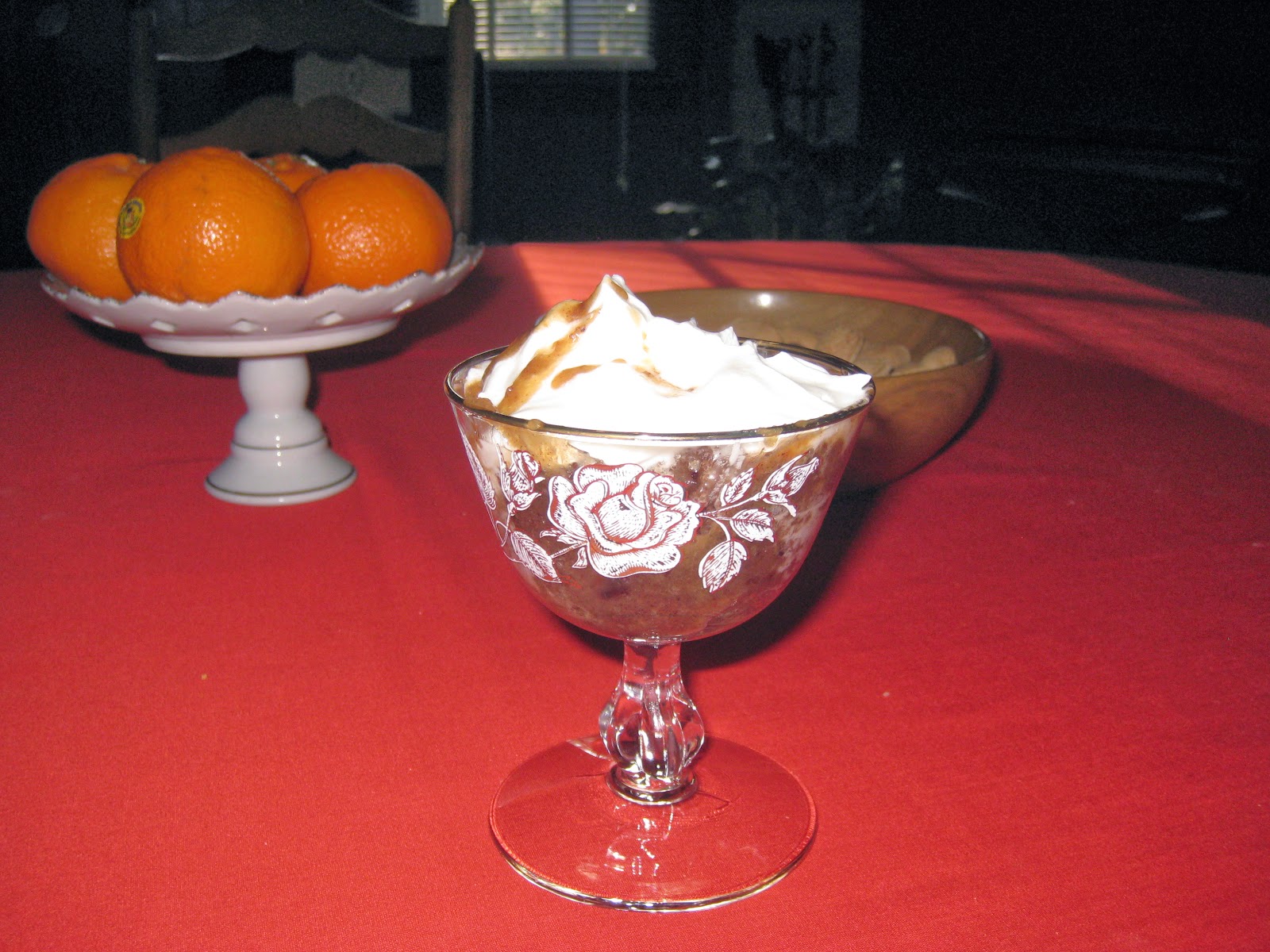
Also, since the UK will be my first country in 2012 I decided to try a recipe for sticky toffee pudding.  This English dessert has gotten quite a bit of buzz this year on the Food Network, etc., and so there are a lot of recipes out there.  I chose this one because it says you can make the cake part in advance, then heat it up with the butterscotch sauce right before serving:

http://www.foodnetwork.com/recipes/sticky-toffee-pudding-with-butterscotch-sauce-recipe/index.html

The cake contains chopped dates but you would really never know it, the dates seem to disappear in the batter.  And the butterscotch sauce is what makes this dessert awesome! 


Sunday, December 11, 2011

Azerbaijani Nights - Part 2

And now for the results of my Azerbaijani dinner party..

I kept everything small and casual - 2 simple appetizers, plov (the famous rice dish), and 2 other main dishes.  My friend Linda brought some baklava for dessert.  Linda and her friend Jane were kind enough to come early and help prepare.

The Appetizers:
http://www.azcookbook.com/olive-walnut-pomegranate-medley-zeytun-perverde/
http://www.news.az/recipes/27251  (Eggplant with tomato and garlic)


The olive-walnut-pomegranate medley is technically from Northern Iran but close enough to capture the right spirit.  I elected to use dried cranberries instead of pomegranate seeds since I was already using pomegranate in another dish (see lamb with pomegranate and chestnuts, below).  The recipe calls for "nasharab" or pomegranate paste which is the same thing as pomegranate molasses. 

Now I just needed something resembling Azerbaijani "tandoor" bread to serve with it.  After researching pictures and descriptions on the internet I decided that a selection of breads from a neighborhood Indian restaurant would work.

As second appetizer/side dish I chose an eggplant, tomato and garlic combination.  The recipes calls for salting the eggplant slices and letting them sit for several hours to draw out any bitterness.  One tip:  go light on the salt because the eggplant will soak up more than you think.  Also, you might try baking the eggplant slices with olive oil instead of frying to save time.

Plov:
http://www.azcookbook.com/layered-rice-pilaff-with-dried-fruits-chestnuts-parcha-dosheme-plov/


For the plov I used real basmati rice rather than American rice because it has a subtly different flavor.  You could definitely experiment with different types of meat and dried fruit in this dish.  One thing I found challenging was getting the saffron threads to dissolve in water even after grinding the threads as small as possible beforehand.  Afterwards I did some internet research.  The consensus was that saffron threads never completely dissolve and so a few visible threads in the finished dish are OK.

Other Main Dishes:
http://www.azcookbook.com/braised-lamb-with-pomegranates-and-chestnuts/
http://www.azcookbook.com/fish-bughlama/


For the lamb dish the most difficult part was extracting the pomegranate seeds or "arils."  Jane was incredibly patient dealing with those pomegranates!  Keep in mind that you can always spend a little extra money to buy the seeds already peeled.  The most important part of the dish is sauteing the onions with the meat until they are a deep golden brown, letting the flavors develop. 

The lemony fish with vegetables and herbs was simple and delicious and also very healthy.  Linda and Jane said the dish reminded them of Chinese-style steamed fish.

Finally, here are a few extra pics of the girls finishing preparations:


Saturday, November 5, 2011

Azerbaijani Nights

For those of you who are wondering, Azerbaijan is a country in the Caucasus region straddling Europe and Asia, a member of the former Soviet Union.   It borders Russia, Georgia, Armenia, Iran and Turkey.  Oh, and it also borders the Caspian Sea - home of the sturgeon - so Azerbaijan is a major caviar producer.

Azerbaijani (or Azeri) cuisine has a lot in common with Turkey, Iran, and countries of the Middle East.  One particularly interesting factoid I discovered:  Azerbaijan boasts nine of the world's eleven climate zones.  The land is very fertile, producing a wide range of fruits and vegetables.  Fresh herbs are an important component of the cuisine. 

This picture of light snacks, Azeri style, sort of drives home the importance of fresh produce:


The national dish is Plov, otherwise known as rice pilaf.  To Americans this may seem like a humble dish but to the Azeris it is the star of the show, the guest of honor at every wedding feast.  Plov comes in a mind boggling number of different varieties involving various meats, herbs and dried fruits.  It is usually prepared in layers and includes saffron.   Here are some visuals:


As I was reading about the cuisine, especially the extensive use of herbs, I became more excited about it than I expected, so I decided to have a small dinner party rather than just fixing a single dish.  Plov for sure would be a prominent item on the menu.  Kebabs are also popular in Azerbaijan but without a charcoal grill I wasn't sure I could do them justice.  So I went searching on the web for recipes.

Compared to some other countries (Egypt and Argentina, for example) it was difficult to find Azeri recipes written in fluent English.  Many of the recipes I found appeared to be Russian in origin, written by people for whom English was obviously a second language.  Not that I'm being critical - my Russian is terrible - just saying...

Finally, I discovered this wonderful website created by an Azeri woman living in California:  http://www.azcookbook.com/  What a life-saver! 

Here I discovered a terrific recipe for plov made with chicken, chestnuts and dried fruit:    http://www.azcookbook.com/layered-rice-pilaff-with-dried-fruits-chestnuts-parcha-dosheme-plov

And some other great recipes:

-  Olive-walnut-pomegranate medley (to serve as an appetizer with bread):  http://www.azcookbook.com/olive-walnut-pomegranate-medley-zeytun-perverde/
- Lemony fish with vegetables and herbs (calls for sturgeon but helpfully recommends swordfish steaks as a substitute): http://www.azcookbook.com/fish-bughlama/

On another website I found this recipe for eggplant with tomato: http://www.news.az/recipes/27251

Bread is extremely important - tandoor bread cooked in a clay oven:


So I decided to order a selection of breads from an Indian restaurant to serve my guests.

Stay tuned for the results of my Azerbaijan experiment!

Sunday, August 28, 2011

Argentinian Barbecue

When I think of Argentinian food I think of three things:  meat, meat, and meat.  Seriously, Argentina is a major producer of beef with significant per capita consumption.  What better way to celebrate the country than a traditional barbecue, or asado?

Argentinian food is heavily influenced by Spanish, Italian and French cuisines so the flavor profiles are familiar.  That being said, I discovered some intriguing new dishes on my Argentinian adventure. 

Case in point:  Grilled provolone cheese -  yes, that means cheese cooked directly on the grill then served with bread.  Sounds like courting disaster, right?  As we discovered the key is getting the grill really hot and quickly searing the cheese before it melts all over the place.   Easier said than done, but the cheese develops a wonderful smokey flavor.    Here's the recipe and a picture of how it's supposed to look:
http://southamericanfood.about.com/od/appetizersfirstcourses/r/provoleta.htm


Also for an appetizer, I attempted faina, an Argentinian flatbread made with chickpea (a.k.a., garbanzo bean) flour.  In case you're wondering, you can find chickpea flour at your neighborhood healthfood store (who knew?).  The recipe includes parmesan cheese and black pepper in the batter plus a topping of blue cheese and spinach.  One tip:  faina works best if you serve it in the same dish used to bake it.  I tried to flip the faina out onto a plate while still warm and let's just say the results were almost disastrous - I managed a quick save!
http://southamericanfood.about.com/od/snacksstreetfood/r/Faina.htm


For the main course I chose a selection of grass-fed ribeye steaks, ribs, and chorizo sausage, spicy and mild.  The meat preparation was simple, just a little salt and pepper before going on the grill.  The big flavors came from the sauces, the famous chimichurri and salsa criollo, a fresh salsa made with tomatos and peppers. 

http://southamericanfood.about.com/od/maincourses/r/GrilledSteaks.htm
http://southamericanfood.about.com/od/saladssidedishes/r/chimichurri.htm
http://www.foodandwine.com/recipes/argentine-barbecue-with-salsa-criolla


For a some extra side dishes I made grilled corn on the cob and heirloom tomato salad. 
http://southamericanfood.about.com/od/saladssidedishes/r/grilledcorn.htm
The grilled corn was a hit!  Very simple - just put the corn on the grill and baste with a butter, ground cumin and salt mixture.  You won't believe the flavor from these few ingredients!

For the tomato salad the key is really, really good tomatoes.  I used some beautiful ripe heirloom tomatoes from the Union Square green market.  I just sliced the tomatoes, added fresh basil, salt, olive oil and balsamic vinegar - no recipe required. 


The biggest revelation was the dessert - alfajores, or shortbread caramel (dulce de leche) sandwich cookies.  http://southamericanfood.about.com/od/snacksstreetfood/r/alfajorpe.htm
These cookies looked unassuming but they got rave reviews from all of the guests.  Sample comments:  "absolutely ethereal" and "better than sex".  This unique recipe calls for nearly equal parts corn starch and flour - in fact, it calls for more corn starch than flour - which may account for the exceptionally delicate texture of the final cookies.  You also had a splash of brandy (or Pisco, a South American liquor) to the dough, which adds interesting flavor.


All together a great success - many thanks to Christi and Ted for letting me use their apartment and the grill!

Sunday, July 17, 2011

Egyptology

My next randomly chosen country was Egypt - still on the continent of Africa but a culinary world away from Zambia and Botswana.  Egyptian cuisine has more in common with Middle Eastern and Mediterranean countries, such as Turkey.  Think pita bread, hummus, kebabs, baklava - you get the picture.  Egyptian cooking is heavy on vegetables and legumes and light on meat, although fish is plentiful around coastal areas like Alexandria.

Interesting factoid:  In ancient times the staples of the Egyptian diet were beer, bread, and onions.  Bread (specifically, pita bread) and onions remain central to the cuisine but beer fell out of favor when the country became Muslim.  For more fun facts here's the wikipedia link: http://en.wikipedia.org/wiki/Egyptian_cuisine

I decided to host a casual Egyptian dinner party, completing all planning, shopping and cooking over the course of two days.  I discovered a wealth of Egyptian recipes on-line, so the menu was easy to put together.   For appetizers I quickly decided on hummus and baba ghanoush, two known crowd-pleasers.  The next obvious choice was koshari, a rice/lentil/macaroni mixture topped with tomato sauce, widely considered to be the Egyptian national dish.  For the protein, I was tempted to try rice-stuffed pigeon (a.k.a., squab) but worried that I wouldn't have time to hunt for it in the stores around town.  So I decided on two more readily available items:  chicken kebabs and spicy shrimp.  To end the meal I chose a traditional dessert called basbousa, a semolina cake soaked with lemon syrup.

Once I eighty-sixed the squab, ingredients were easy to come by.  The only slightly unusual items were tahini, a sesame paste for the hummus and baba ghanoush, and semolina flour for the basbousa.   I was able to find both items at my neighborhood grocery store.  As an aside: semolina flour is also the main ingredient in pasta. 

Here are the links to the recipes I used and a few notes on the cooking process:

The Appetizers: 
- Hummus  http://www.whats4eats.com/appetizers/hummus-recipe
- Baba Ghanoush:  http://www.whats4eats.com/appetizers/baba-ghanoush-recipe

The hummus was so easy it practically made itself - just put all of the ingredients in a food processor and puree.  I added a little ground cumin since the recipe mentioned it was traditional in Egypt.  I also sprinkled paprika around the sides for color.  The baba ghanoush was a bit more involved because you had to bake the eggplant first.  I roasted my garlic along with the eggplant instead of using it raw, just because I like roasted garlic.  I served both dips with pita bread and pita toasts.  A word to the wise:  beware of any recipe for baba ghanoush that calls for mashing up the eggplant with a fork.  No matter how long you cook it the eggplant will be somewhat fibrous - the food processor is sooo much easier.  

Here's a picture of me with the appetizers and some close-ups of the dishes:


- Koshari, the Egyptian national dish:  http://www.food.com/recipe/koshari-39446

The koshari was the most time-consuming recipe of the evening but also worth it.  The key to the whole dish is the tomato sauce that you spoon on top.  After simmering the onion and garlic mixture with tomatoes, crushed red pepper flakes and a little cumin, you won't believe the flavor!  The recipe didn't call for cumin, that was my addition.  I also added a little extra oil to the finished dish to keep it moist and sprinkled it with cilantro for color. 


The proteins:
- Chicken kebabs: http://www.food.com/recipe/egyptian-kebabs-138110
- Shrimp: http://www.food.com/recipe/spicy-king-prawns-140689

The chicken kebabs and the spicy shrimp were super easy and also delicious.  I picked the kebab recipe because of the yogurt-based marinade.  The cooking time was fast - less than 10 minutes under the broiler - however I would recommend assembling the kebabs the night before just to get it out of the way.  The spice mix in the shrimp dish was to die for - paprika, cumin, ginger and cayenne.  Yum!


The dessert:
- Basbousa:  http://www.food.com/recipe/basbousa-1576-1587-1576-1608-1587-1577-12957

The dessert turned out nicely also.  The basbousa was nice and moist after soaking in the lemon syrup although it did taste a little like sweet cornbread.  Here's a nice picture of my friend Linda holding the cake right before we served it:


The Egyptian dinner was a huge success and a lot of fun.  Stay tuned for the next adventure!

Tuesday, May 31, 2011

A Southern African Feast

As I'm preparing for my Zambian/Botswanan feast, I'm amazed at how simple the ingredients are for my three dishes:

- Nshima, a.k.a. Pap:  water and corn meal
- Ifisashi:  ground raw peanuts, tomatoes, onions, collard greens
- Seswaa:  beef chuck, onion, garlic

Not only were the ingredients simple, they were also inexpensive.  The beef chuck, onion, garlic, tomatoes, and corn meal were obviously easy to find.  I used swiss chard instead of collard greens because it was readily available.  Believe it or not, the most difficult ingredient to find were the raw peanuts.  Think about it:  at the grocery store you usually see dry roasted peanuts, not raw. 

I ended up taking a trip to Kalustyan's on Lexington between 28th and 29th http://www.kalustyans.com/default.asp to find the raw peanuts and also because I needed an ingredient for another recipe (the ingredient was pomegranate molasses, but that is a different story).  While I was there I also purchased some fancy stone ground corn meal, to see if it was any different from the ordinary corn meal I'd found at the grocery store.  Here are the photos of the dueling corn meals - more about that later:


When I got back home I started on the beef dish because it took the longest to cook.  The beef chuck was already cut into pieces for stew so all I needed to do was put it into a pot with water and let it simmer.

As the meat was cooking I began the ifisashi, the vegetable dish.  The first step was to grind up the raw peanuts in my coffee/spice grinder.  I have to say, after tasting the raw peanuts I understand why they are normally sold already roasted.  Peanuts have an unpleasant "green" taste in their raw form.  Once ground into a powder, I added the peanuts to a pot of boiling water along with some chopped up tomato and onion.  

As the mixture cooked it became white and thickened up almost like a cream sauce: 


At this point I reduced the heat and added the greens, already chopped into bit-sized pieces, and let the mixture cook down to a sauce-like consistency.

Meanwhile, the meat was cooked and nicely tender, ready for the next step.  Now for the fun part:  I put the meat in a plastic ziploc bag, added some kosher salt, and pounded it into shreds with a meat tenderizer:


How's that for releasing agressions?

The shredded meat went back in the pan to sautee along with some onion and garlic, becoming beautifully browned and carmelized.  My dog Daphne thought it smelled good at any rate - here's a picture of her trying to climb up onto the stove to get a taste:

Last but not least I started on the corn meal.  The recipe was simple but labor-intensive (basically, you keep adding corn meal to hot water a little at a time while bringing the water to a boil, stirring continuously).  Everything I'd read about Nshima indicated that it was bland to Western tastes but that Zambians could detect minute variations from using different varieties of corn meal.  As an experiment I made two different batches, one with the grocery store corn meal and one with the stone ground white corn meal from Kalustyan's.  Although skeptical at first,  I had to admit that the Kalustyan's corn meal was more flavorful and had an unbelievable, almost floral aroma.

Here are some pictures of the final results - a tasty Southern African feast!


Seswaa


Ifisashi and Nshima


Monday, May 23, 2011

Botswana or Bust!

Botswana and Zambia are neighbors, so I expected their cuisines might be similar.  Turns out I was right! Wikipedia has a good introductory article on Botswanan cooking:
http://en.wikipedia.org/wiki/Botswanan_cuisine

Remember nshima, the Zambia staple made from cornmeal?  Botswana has its own take on nshima, called "pap".  Also interesting, Botswana raises a lot of beef for food.  The national dish is seswaa, a kind of mashed up beef dish served over pap with gravy.

I've found a few good recipes for seswaa:
http://www.marga.org/food/int/botswana/seswaa.html
http://myhungrytum.com/2010/03/15/seswaa-botswana-national-dish-day-65dish-33/
http://foodivakitchen.blogspot.com/2010/09/seswaa-taste-of-botswana-in-my-kitchen.html 

These recipes are all very similar in basics:  each calls for boiling the meat in water until tender (about 2 1/2 hours) and then pounding it until it breaks down into shreds.  Seasonings are salt, onion and garlic.  The first recipe is my favorite because it calls for carmelizing the beef after boiling and shredding.  I'll also make a gravy out of the pot liqueur using either corn starch or flour, as recommended by the last two recipes.

So I now have the ingredients for a delicious Southern African feast:
- Nshima/Pap as the starch
- a Zambian style relish:  infishmia, the green vegetable dish boiled with peanut powder
- and the Botswana national dish, seswaa

One interesting aside on Botswana:  the country's wildlife reserves are major tourist attractions.  These reserves include Chobe National Park, which has the world's largest concentration of African elephants.